

A Final-Year Group-Led Research on a Dry-Contact EEG Monitoring System Accepted for Publication in Prestigious IEEE TBME
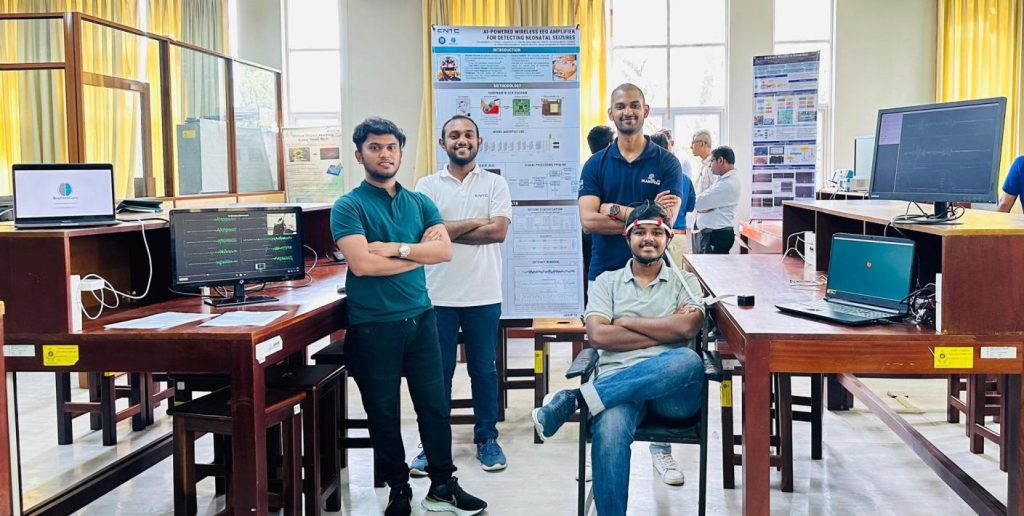
A paper authored by Nima Wickramasinghe, Dinuka Sandun Udayantha, Akila Abeyratne, and Kavindu Weerasinghe, co-supervised by Dr. Chamira U. S. Edussooriya, Dr. Anjula De Silva, Prof. Jithangi Wanigasinghe, and Kithmin Wickremasinghe, has been accepted for publication in the prestigious IEEE Transactions on Biomedical Engineering (TBME).
The research, titled “An Active Dry-Contact Continuous EEG Monitoring System for Seizure Detection Applications in Clinical Neurophysiology,” details a novel approach towards developing a cost-effective and user-friendly continuous EEG monitoring system for seizure detection in representative clinical settings. This work is significant for its attempt to address a long-standing need for comfortable and reliable EEG monitoring systems, potentially improving patient care and extending to young children.
It began as a final-year project at the Department of Electronic and Telecommunication Engineering (ENTC) by a team of biomedical engineering undergraduates. This achievement highlights the calibre of biomedical research conducted by our students and faculty, demonstrating the department’s modest commitment to advancing wearable technology and personalized medicine. This publication in IEEE TBME, a top-tier Q1 journal ranked among the top 10 in the field, is a significant accomplishment for the university in advancing biomedical research.
The computational resources used in the project were funded by the Accelerating Higher Education Expansion and Development (AHEAD) Operation of the Ministry of Higher Education of Sri Lanka, sponsored by the World Bank. A special thanks is conveyed to the staff and technicians from Lady Ridgeway Hospital for Children, Sri Lanka, for facilitating the patient experiments. This publication was further financially supported in part by the Senate Research Committee, University of Moratuwa.
Link to paper: https://ieeexplore.ieee.org/document/11230808
ENTC Wins Manamperi Main Award 2025 for the Best Inter-University Final Year Undergraduate Project in Engineering
A Final Year Research Project from the 2020 Batch of the Department of Electronic and Telecommunication Engineering (ENTC), University of Moratuwa, has been awarded the Manamperi Main Award 2025 for the Best Inter-University Final Year Undergraduate Project in Engineering.
The research project, titled “A Screening Tool for Cardiovascular Disease Management in Resource-Constrained Environments,” was carried out by a team comprising three students from the Biomedical Engineering specialization: Avishka Herath, Malith Jayalath, Sanjana Kapukotuwa, and one student from the Electronic and Telecommunication specialization: Kumudu Kaushalya, under the supervision of Dr. Chamira Edussooriya and Dr. Wageesha Manamperi.
The project focuses on the development of a low-cost, intelligent cardiac screening device that can record and analyze heart sounds (phonocardiograms) and ECG signals simultaneously to assist doctors in the early detection of cardiovascular abnormalities. Designed specifically for use in resource-limited healthcare settings, the device serves as an intermediate diagnostic tool between traditional stethoscope examinations and echocardiography, aiming to support clinical decision-making.
This prestigious national recognition highlights the team and department’s commitment to innovation in biomedical instrumentation and its potential impact on improving accessible and affordable healthcare technologies in Sri Lanka and beyond.
The team extends their heartfelt gratitude to their co-supervisor, Mr. Kithmin Wickremasinghe, for his continuous guidance and support, and to Mr. Pahan Mendis and Ms. Chathuni Wijegunawardena from Voex Technologies for their valuable mentorship throughout the project. The team also wishes to express sincere appreciation to Voex Technologies for funding the project. Special thanks are also extended to Dr. Duminda Samarasinghe, Consultant Paediatric Cardiologist at the Lady Ridgeway Hospital for Children, for his invaluable medical guidance, expert insights, and support in facilitating the clinical aspects of the research.
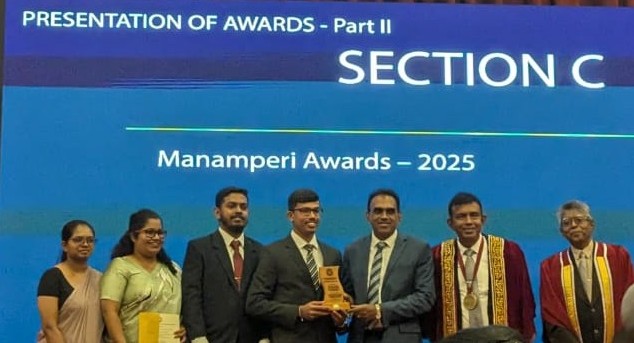
The “Manamperi Award” is awarded by the Sri Lanka Association for the Advancement of Science (SLAAS) each year for the Most Outstanding Undergraduate Engineering Research Project. It is open to all Engineering graduates who have graduated from a recognized university in Sri Lanka and completed a Final Year Research Project (Individual or Group) within the duration of the year this award is presented.
Read MoreSLRC 22 Advanced Robotics Workshop: A Journey into the Realm of ROS
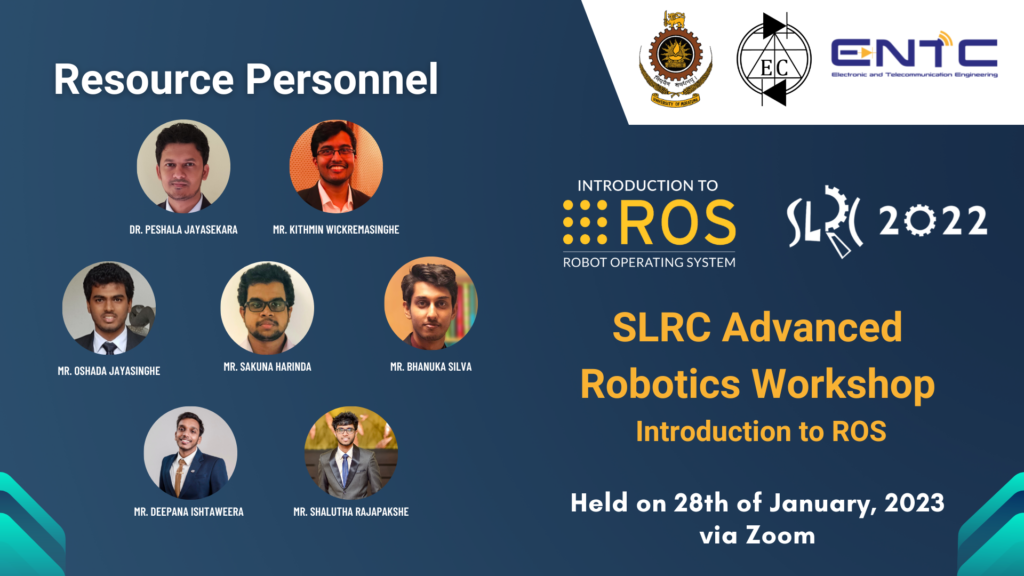
The Sri Lankan Robotics Challenge (SLRC) is an exciting place to promote robotics education and research in Sri Lanka. The SLRC branch of Electronic Club, Department of Electronic and Telecommunication Engineering (ENTC), University of Moratuwa (UoM) hosted a one-day online workshop titled “Introduction to Robot Operating System (ROS)” in conjunction with the SLRC 22/23 competition on January 28th, 2023. The workshop aimed at anyone who was interested in developing advanced robotic systems using ROS.
The instructor panel included fully competent resource personnels led by Dr. Peshala Jayasekara, a senior lecturer at ENTC, UoM, as well as few other ENTC graduates namely Mr.Kithmin Wickramasinghe, Mr. Bhanuka Silva, Mr Oshada Jayasinghe, Mr Sakuna Harinda , Mr Deepana Ishtaweera and Mr Shalutha Rajapaksha who extended their fullest support to make the event a success.
The program kicked off with an overview of the fundamentals of ROS, including its architecture, communication strategy, and message passing framework. Afterward, the participants were guided through creating a basic robot system in ROS utilizing its various tools and libraries. The participants were given access to a virtual environment to practice designing and developing robots with ROS. Robot sensors and actuators, robot control, and computer vision were just a few of the more complex topics that were covered in the program. The instructor panel also provided participants with tips and best practices for building robust and efficient robotic systems using ROS.
Throughout the day, participants were encouraged to ask questions and seek guidance from the instructors. This created a collaborative and supportive learning environment where participants could learn from each other’s experiences and insights. The workshop was attended by a 140+ diverse group of participants, including school students, undergraduates, and professionals from various industries from all over Sri Lanka and beyond.
At the end, the participants’ feedback was overwhelmingly positive, with many praising the workshop’s worth for their professional development and the caliber of the training. The SLRC received acclaim from participants for offering such a forum for free robotics study and networking with like-minded people.
Overall, the SLRC’s one-day online ROS program was a huge success, giving participants a firm grounding in both advanced robotics principles and ROS. The event served as an invaluable resource for anyone interested in using ROS to construct sophisticated robotic systems and demonstrated the SLRC’s dedication to promoting robotics in Sri Lanka.
Dulini Himeka
NBQSA 2022 – National ICT Awards
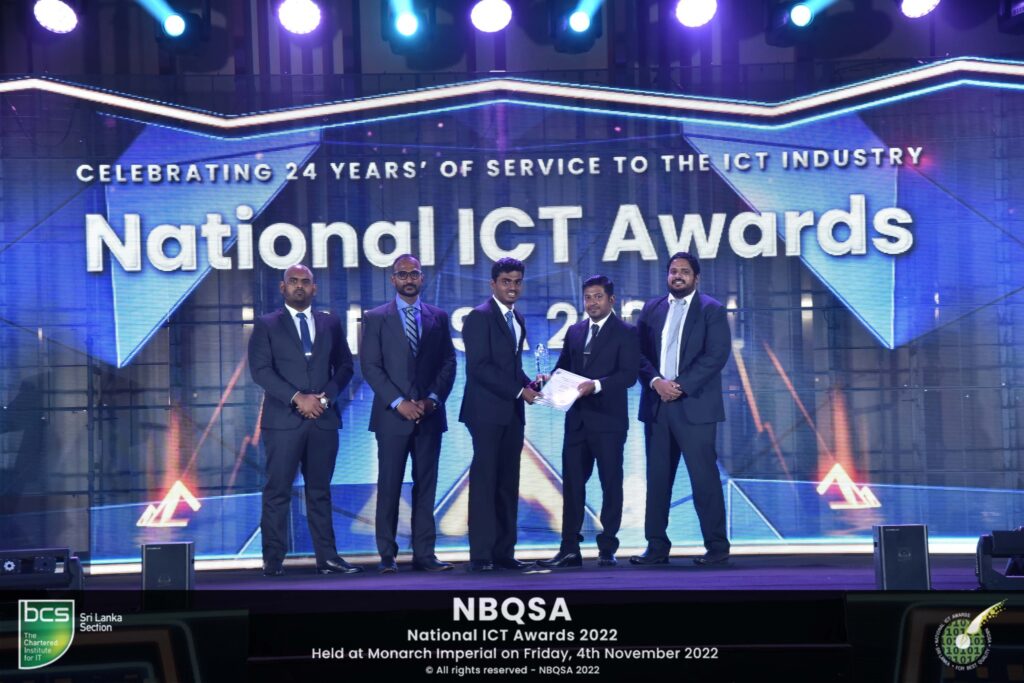
The final year project titled “Road Sign, Traffic Light and Static Object Detection for Self-Driving” won the Student Research Project of the Year Award and the Bronze Award for Tertiary Students Projects (Technology) at the National ICT Awards – NBQSA 2022. The project has also been nominated to APICTA (Asia Pacific ICT Alliance) Awards 2022 which will be held in Islamabad, Pakistan from 7th to 11th December 2022.
The National Best Quality Software Awards (NBQSA), which is held by the British Computer Society for the past 24 years, provides recognition to outstanding achievements of individuals and organizations in Sri Lanka in the ICT domain. The Tertiary Students Projects (Technology) Award targets the best technical solutions proposed and implemented by undergraduates while the Student Research Project of the Year Award identifies the undergraduate project with the highest research impact.
The award winning project is focused on real time detection of traffic signs, traffic lights, lanes and road markings in a resource constrained environment. Three deep learning based detection frameworks have been developed to cater this requirement and the trained detection models have been optimized using TensorRT and integrated together to deploy as a complete static object detection system on an embedded system. In addition, two benchmark datasets have been created, one for traffic signs and traffic lights, and the other for road markings in the Sri Lankan domain. The research contributions of the project have been published as three papers in IEEE ICMLA 2021, IEEE/CVF WACV 2022 and IEEE IV Symposium 2022.
Six ENTC Graduates Join Harvard as Post Baccalaureate Research Fellows to Work on Computational Imaging and Computational Biology
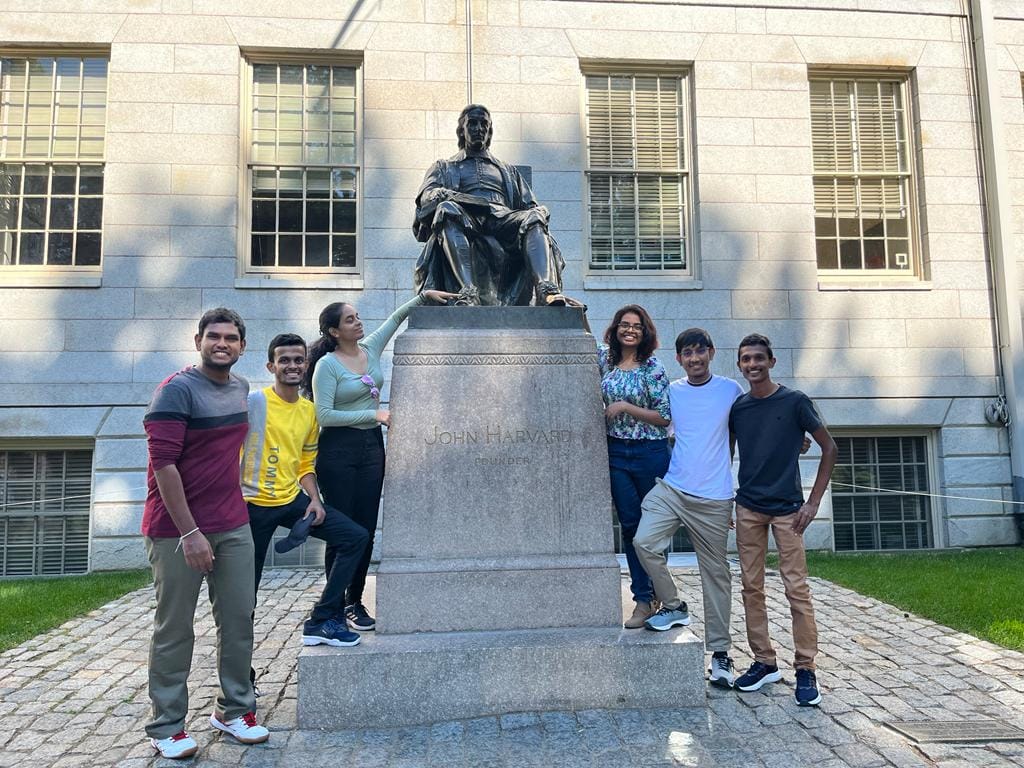
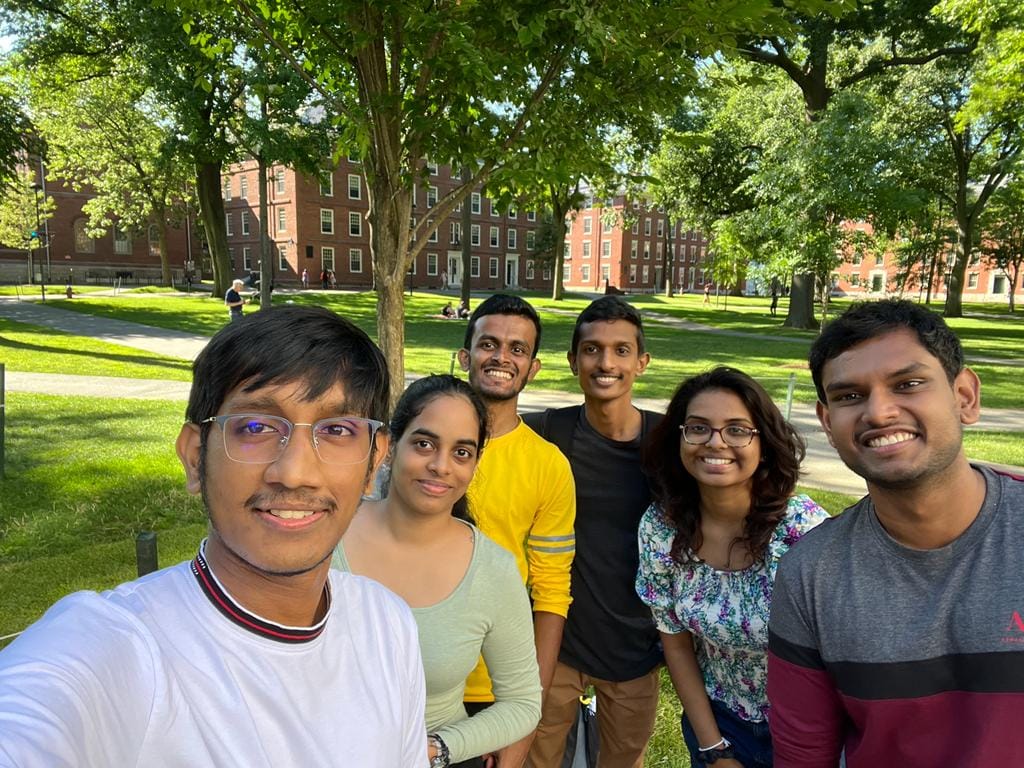
Six students in the graduating class Jathurshan Pradeepkumar, Kithmini Herath, Mithunjha Anandakumar, Ramith Hettiarachchi, Udith Haputhanthri, and Hasindu Kariyawasam, joined Faculty of Arts and Sciences at Harvard University as Post Baccalaureate Research Fellows to Work on Computational Imaging and Computational Biology.
Under the computational imaging areas, they will be particularly working on a new microscopy design framework named, differentiable microscopy which is a new concept introduced by the Harvard laboratory, Wadduwage lab. Under computational biology, they will be working on problems related to protein folding and protein design with SoLab.
SPARK Award Ceremony and Launch
At the SPARK award ceremony and launch the three top teams that proposed engineering solutions to problems that affect the society addressing the Sustainable Development Goals (https://sdgs.un.org/goals) won awards and cash prizes. This was after a year-long process of ideation and prototype development by many teams. Ten teams reached the final pitching round held on July 24, 2022. An eminent panel of judges comprising Mr. Fayaz Hudah, Mr. Chalinda Abeykon and Mr. Josh Robsen made the selection of winners.
Supun Kuruppu, Chirantha Kurukulasooriya, Dumindu Bandara, and Biyon Fernando as Team Phantom won the grand prize, a trophy and a cash prize of Rs 600,000. As the coral population throughout the world is rapidly declining due to the prevailing climate crisis and toxic human activities, Team Phantom proposed to collect the coral gametes using a robot to subsequently provide proper conditions for growth. The proposed robot automates the current process which the scientists have to undergo diving and collecting the gametes by themselves.
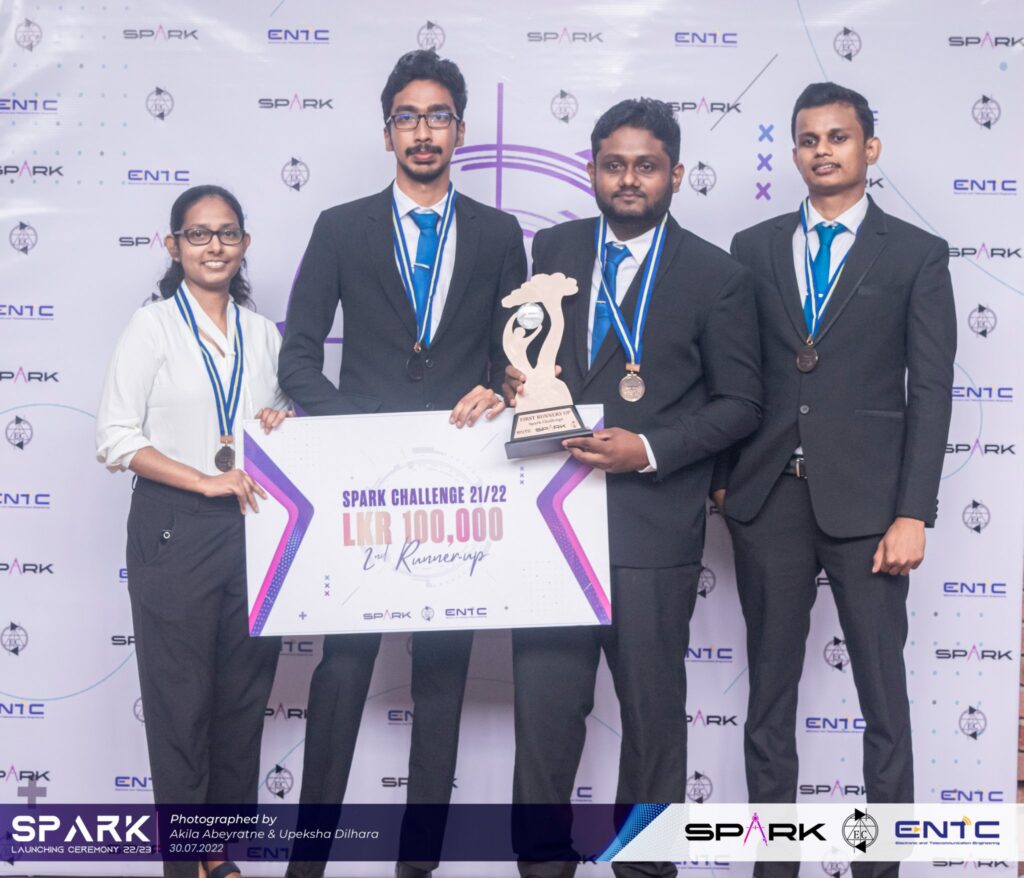
First runners up, Team Axon, comprised Nuwan Bandara, Sahan Hettiarachchi, Kulunu Dayasekara, Dasun Premathilake. They proposed a system to monitor the depth of anesthesia to tailor the drug administration to the individual patient, thus preventing excessive anesthetic depth and improves patients’ outcome. Second runners up, Team Fix-It, comprising Sahan Viduranga, Isuru Munasinghe, Yomali Lokugama, and Vishawa Oshadha introduced a system that continuously checks the pollutant levels of water in rivers and reservoirs. The two teams won Rs 300,000 and Rs 100,000 respectively.
Following the award ceremony, the SAPRK project launched the 2022-2023 challenge that includes the students of the Intake 2020. The event took place on July 30, 2022, at the Civil Engineering Auditorium. Mr. Heminda Jayaweera delivered the keynote address. The award ceremony and launch were educational, and exiting for all the participants.
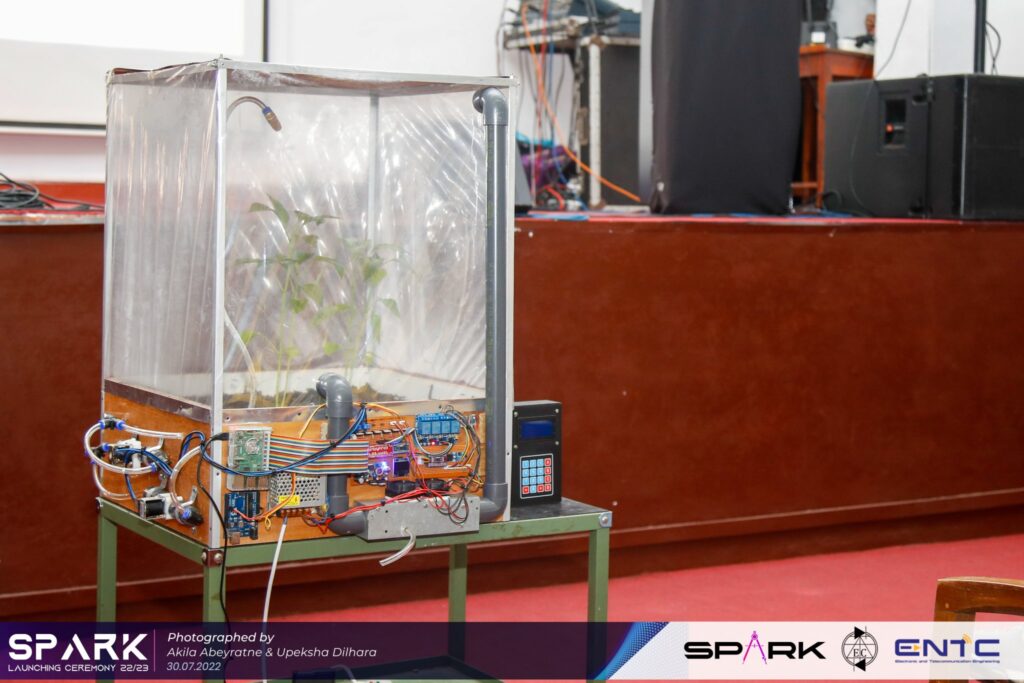
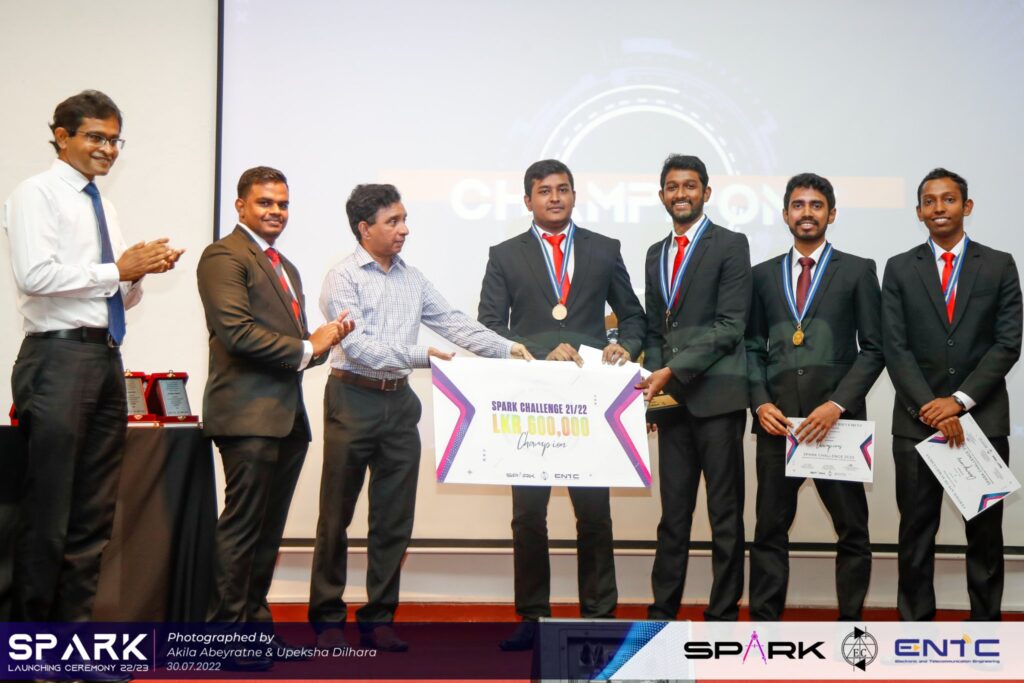
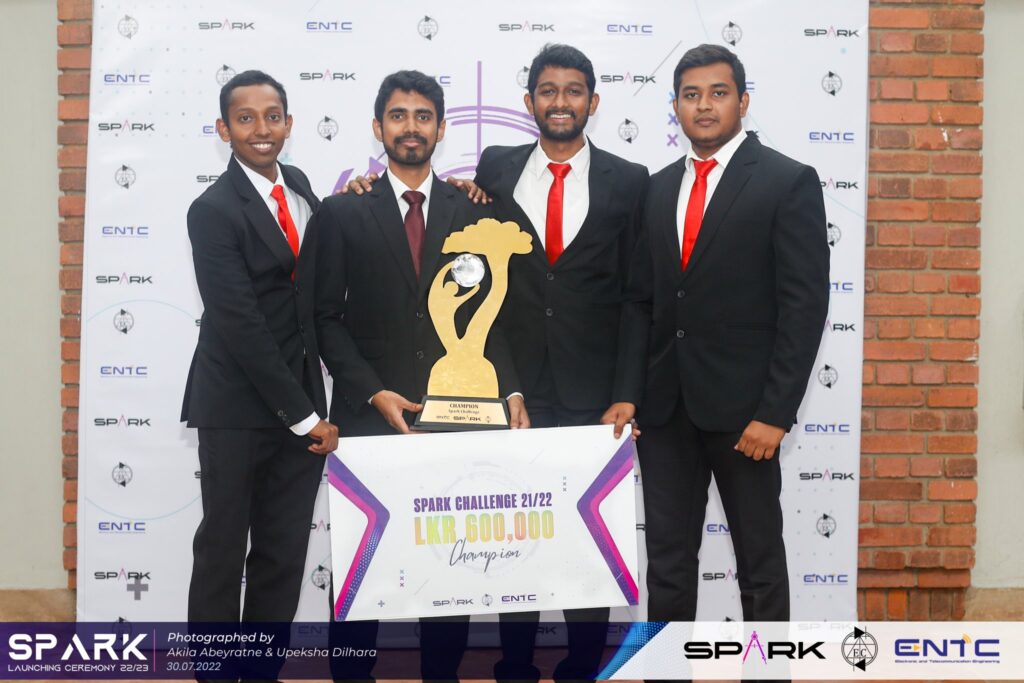
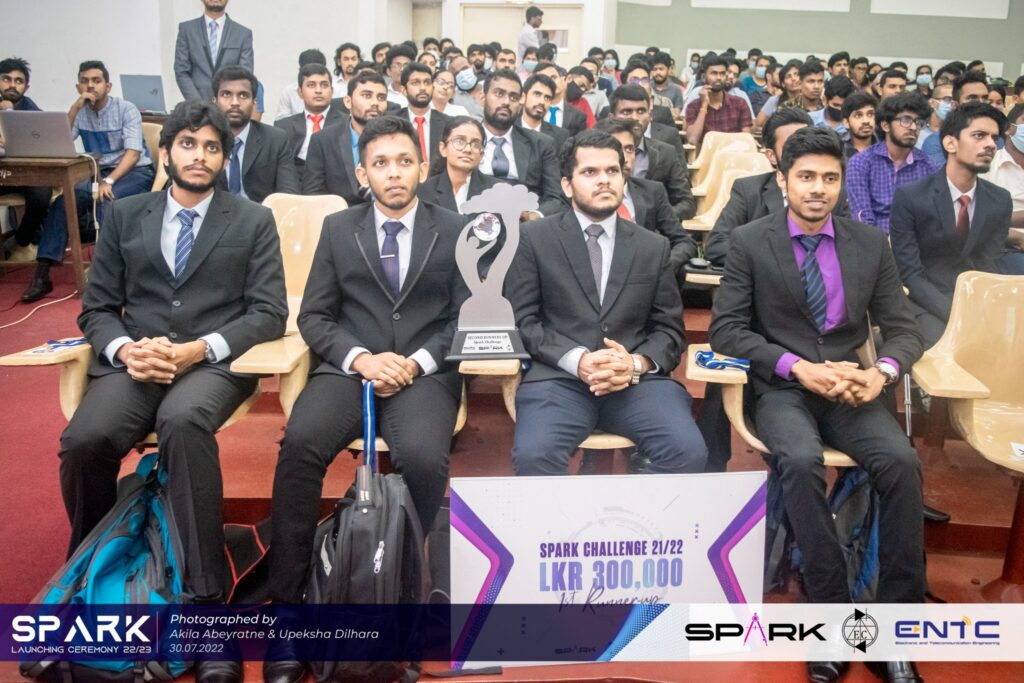
SPARK Pitching Sessions
SPARK project aims to drive projects that solve crucial problems that mankind faces such as climate change, food scarcity, and inequality in education though the application of engineering principles. All these are important aspects of the 17 Sustainable Development Goals (https://sdgs.un.org/goals). Approximately 35 student teams worked on developing solutions to problems that address one or more such goals. Ten groups were able to propose fully-developed ideas and make prototypes. This was possible after a long-term training provided by SAPRK with the involvement of foreign trainers.
As the culmination of this year-long process, the ten groups pitched their projects to an eminent panel of judges comprising Mr. Heminda Jayaweera, Mr. Fayaz Hudah, Mr. Chalinda Abeykon and Mr. Josh Robsen. This pitching session took place on July 24, 2022 at the Department of Electronic and Telecommunication Engineering in a vibrant setting with many students and staff members watching and deliberating about the possible impact of the projects.
Read MoreTeam AP116 wins Silver Award in the Grand Finals of InnovateFPGA Design Contest 2021/22
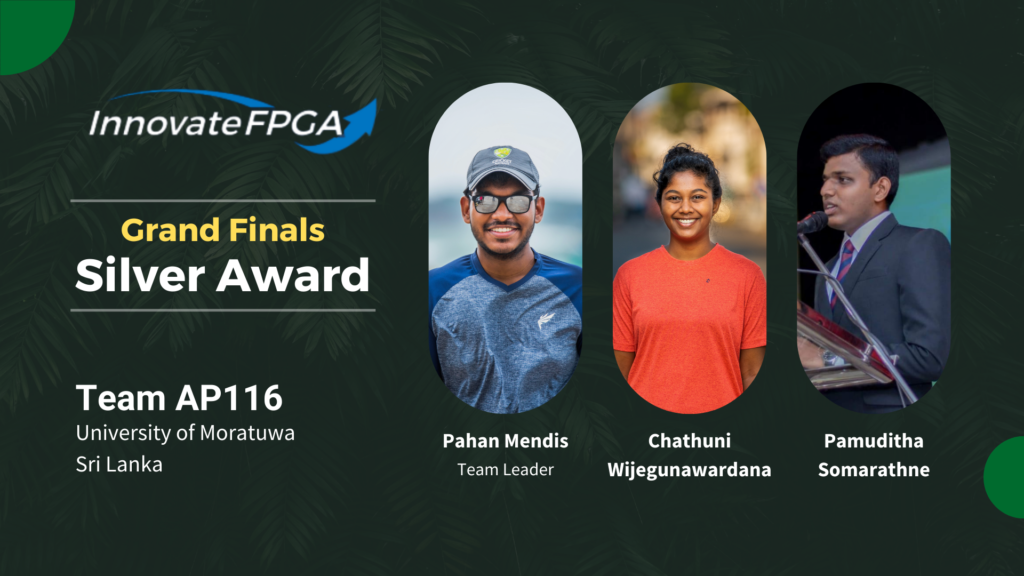
Team AP116, representing Pahan Mendis, Chathuni Wijegunawardana and Pamuditha Somarathne from the Department of Electronics and Telecommunication Engineering, has won the Gold Award in the Asia Pacific and Japan(APJ) region and the Silver Award from the whole world in InnovateFPGA Design Contest 2021/22. The team was guided by Dr. Ajith Pasqual as a faculty advisor and Mr. Abarajithan Gnaneswaran and Mr. Kithmin Wickramasinghe. This is the first time that a team from Sri Lanka has received one of top three prizes in this competition.
The InnovateFPGA Design Contest is a global competition based on Intel FPGAs, which is organized by Terasic Inc. with the collaboration of Intel Cooperation, Analog Devices, Microsoft as diamond sponsors and Digi-key, Mouser Electronics, Arrow Electronics and Macnica as gold sponsors. The theme for this year’s competition was ‘Connecting the edge for a sustainable future’. The teams were encouraged to utilize Intel FPGA Cloud Connectivity Kit, Microsoft Azure IoT and Analog Devices Plug-in boards in their projects.
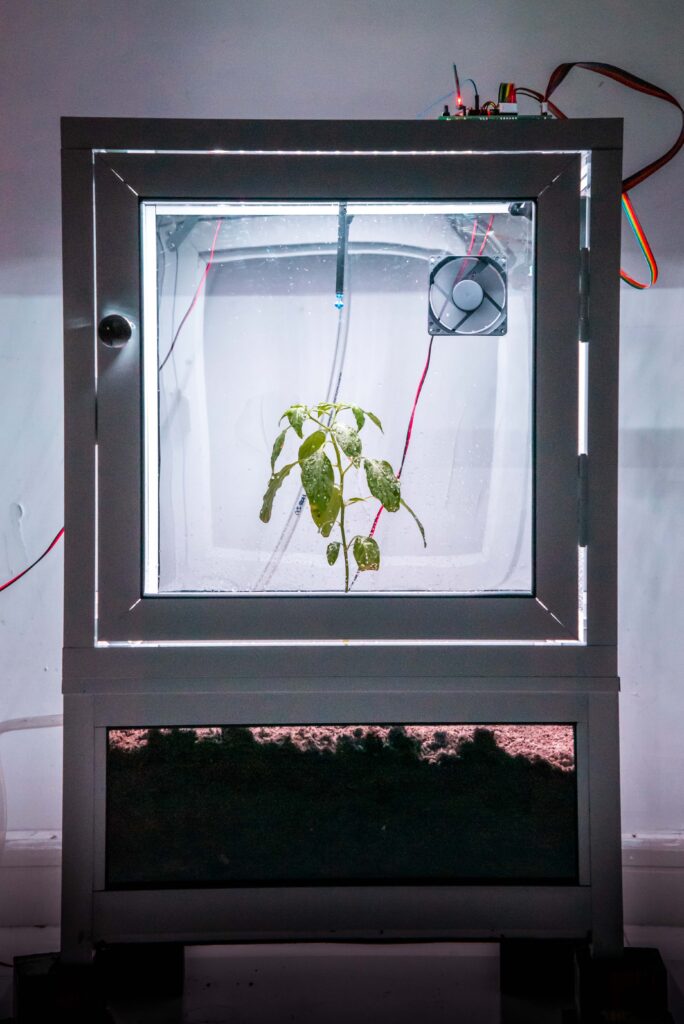
To address these objectives, our team brought forth a concept of the Green Machine, a smart, user-friendly, domestic mini-greenhouse system to enable users to grow and efficiently monitor and tend to plants with much ease. This is suitable for domestic users to grow their own food in their homes. Also, due its modular design, the farmers can combine multiple units of Green Machines for cultivation in small to large scale farms. The condition within the Green Machine is monitored using a set of sensors and cameras and the sensor and image data is sent to the Terasic DE-10 Nano, a development kit based on Intel CycloneV SoC FPGA, for processing. After the processing, the sensor and image data are transferred to a Cosmos Database System on Microsoft Azure to be analyzed for further optimizations. Our team initially submitted their proposal back in October and got selected to the regional semi-finals along with 74 other teams in the APJ region. Then, they received the Intel Cloud Connectivity Kit with Terasic DE10 Nano Development board and 3 plug-in boards from Analog Devices to develop their project. They submitted a detailed design paper and a demo video in April and got selected to the regional finals. They went through a virtual QnA session with judges from Terasic, Intel, Microsoft and Analog Devices during the regional finals and emerged as the Gold Award Winners in the APJ region. With that, they were invited to the Grand Finals at the Intel Innovation Campus in San Jose, California, USA with 10 other teams around the world. Unfortunately, due to the rising covid cases in California, the Grand Finals later shifted into a virtual format. Nevertheless, our team presented their project with several improvements, to the Grand Finals in June and received much appreciation for its sustainability impact and the project presentation. The event was judged by experts from Terasic, Intel, Microsoft, Analog Devices and Digi-key.
Migara Ratnatunga Trust Award for Industrial Training for Undergraduates 2020/2021
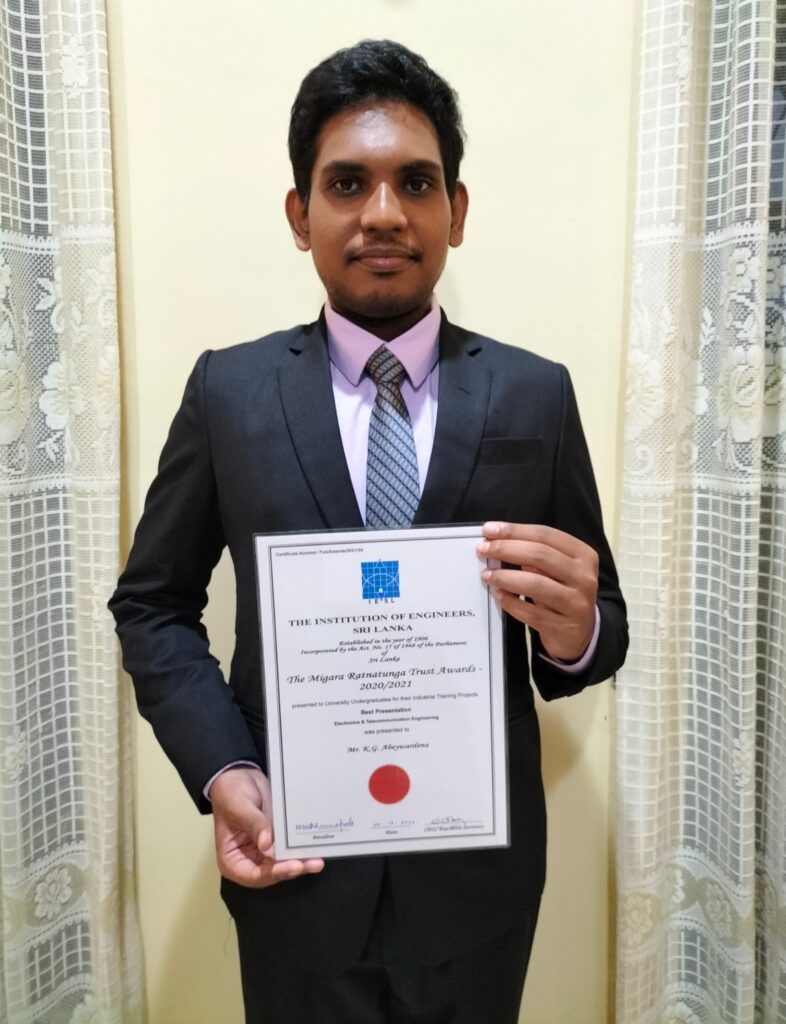
Kalana Abeywardena, an immediate graduate of Department of Electronic and Telecommunication Engineering, University of Moratuwa, won the Migara Ratnatunga Trust Award (All island 1st place – Category A) for the year 2020/2021 which was awarded by the Institution of Engineers, Sri Lanka (IESL) for the best Electronic and Telecommunication Engineering trainee who portrayed excellent performance at Industrial Training. The award (a cash prize and certificate) was presented at the IESL induction and graduation ceremony on Friday, June 17, 2022.
Kalana completed his 6 months industrial training at the School of Computer Science of the University of Sydney, Australia as a Visiting Research Student under the supervision of Dr. Suranga Seneviratne in 2019. During the training, he was mainly engaged in two projects: he developed a cyber security framework to address phishing attacks on websites using computer vision and artificial intelligence and worked on depth filters and artificial intelligence to process Light Field signals to improve their signal power. Moreover, he worked as an undergraduate assistant in a summer program organized by the University of Sydney for international students from China.
Migara Ratnatunga Trust Award is awarded to the high achievers of level 3 industrial training module at the Annual sessions of IESL. The results of the evaluations done by the university training division will be submitted to the IESL, where a few undergraduates would be recognized as high achievers in the compulsory industrial training module in the engineering undergraduate program after a rigorous evaluation among the undergraduates of other state universities.
Multi-Label Reduced-Lead EEG Classification Using CNNs
Nima Wickramasinghe from the Department of Electronic and Telecommunication Engineering (ENTC), together with his mentor Mohamed Athif from the Department of Biomedical Engineering, Boston University (previously an undergraduate at ENTC) have written a research paper, titled “Multi-label Classification of Reduced-lead ECGs using an Interpretable Deep Convolutional Neural Network” which has been accepted to be published in the journal Physiological Measurement as a special issue paper.
In their work, they propose a novel method to identify the presence of 26 cardiac abnormalities in an ECG recording with reduced leads. Even though most of the previous work relies on 12-lead ECGs, classification using reduced leads remained unexplored. In their research, they trained a deep convolutional neural network to classify the ECG recordings and showed that the reduced-lead model performs comparably to the 12-lead model. In addition to accurately classifying the cardiac abnormalities, they have used SHAP (shapley additive explanations: a game-theoretic approach used to explain the output of any machine learning model) to interpret the deep learning model. The authors identified that the model learns almost the same diagnostic criteria used by cardiologists to classify cardiac abnormalities. By analyzing the model through SHAP, they were able to detect why the model underperforms in some of the classes, which was mainly due to the lack of discriminating features in reduced leads, labeling inconsistencies in the dataset, and low number of samples.
Physiological Measurement is a journal that covers the quantitative measurement and visualization of physiological structure and function in clinical research and practice, with an emphasis on the development of new methods of measurement and their validation. The Sustainable Education Foundation facilitated the collaboration between the 2 authors.
DOI Link to the paper: https://doi.org/10.1088/1361-6579/ac73d5
Read More